The Uncle’s Request: A Cuban Film at the Manhattan Film Festival

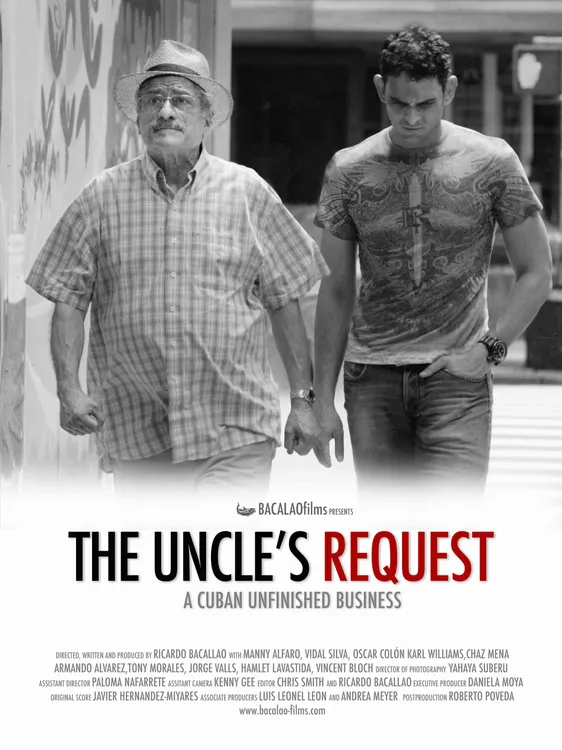
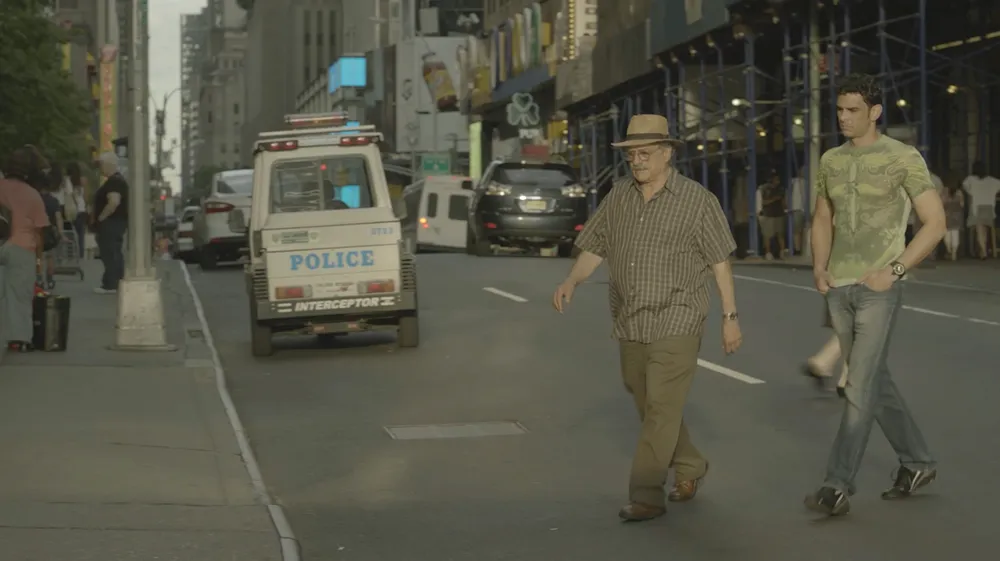
The Uncle's Request, a feature film by Cuban filmmaker Ricardo Bacallao, presents a narrative grounded in the enduring dynamics of the Cuban diaspora in the United States—specifically, in New York. Of yesterday and of today. As current as the blossom of the avocado tree. As a synopsis, the screenwriter and director describes the film as “a political thriller that blends real testimonies with fiction. Manolo is a hardline Cuban American who tracks down Cuban defectors who committed crimes against Cubans in Cuba but now reside in the United States. One day, he receives confirmation that the man responsible for the suffering of his innocent brother in Cuba is nearby, and he asks his nephew to help him seek justice. However, Uncle Manolo harbors a hidden agenda involving his nephew. No one is innocent.”
No one is innocent. The phrase reverberates. It paralyzes. Is there any escape from this vicious cycle—hatred and revenge? What would you do in such a dilemma? These and many other existential, discerning questions surface through the intricate juggling of the plot. “This film raises more questions than answers about the Cuban dilemma. It pains me to see that, fourteen years after its conception, its themes remain as relevant as ever. Completing this project is not only an artistic endeavor but also a commitment to honor the voices of those who contributed to it and the experiences that shaped its narrative. The Uncle’s Petition has been a long and profound personal journey. The first version of the film was completed in 2012 as my graduation thesis for the Tisch Asia Film Program at New York University.” Throughout the history of cinema, such “theses” have at times become masterpieces bearing the unmistakable imprint of their creators—for example, The Killer by Tarkovsky, or El Mariachi by Rodríguez. Given its exquisite craftsmanship and its enduring spiritual (not merely political) relevance, I regard this effort as a minor Picasso.

Let me explain. The Cuban diaspora is one of the most significant Latin American communities in the United States, shaped by successive waves of migration that reflect the political, economic, and social transformations of Cuban history. Although Miami remains the most densely populated center of Cuban exile, New York has been, and continues to be since the mid-twentieth century, a fundamental place—a platform for the development of these contemporary ethnic processes.
The figure of the uncle encapsulates an entire generation: the first wave (1959–1962) of political exile. Following the so-called Cuban Revolution, when the largest and most consequential exodus began. Predominantly composed of middle classes and professionals. This group perceived their departure as exile rather than economic migration, many of these established businesses, as well as political and cultural organizations, in the United States. New York received a significant portion of these exiles—intellectuals, musicians, artists, and industrial workers who found opportunities beyond the Miami enclave.

The uncle, masterfully portrayed by the recently deceased Manny Alfaro, is a villain with whom one ultimately sympathizes. He reveals himself as judge and executioner—homophobic with devastating consequences, vengeful, and opaque. Why, then, does he captivate us? The villain, or antagonist, is the engine of conflict in cinema. The role has evolved from the embodiment of pure evil in classical film, to a more complex role with charismatic figures who challenge the viewer’s moral framework and compel the protagonist’s transformation. This is precisely the case in The Uncle’s Petition. The three poignant testimonies—Jorge Valls, a renowned poet who spent fifteen years and forty days in military prisons; Armando Álvarez, who personally encountered the man responsible for his father’s suffering; and the young Tony Morales—serve as a dramatic device that lends authenticity to the narrative while philosophically engaging with these dilemmas. And you, esteemed spectator, are drawn into the same reflection.
“In 2015, while teaching a documentary course for Syrian refugees in Germany, my computer was stolen after a class, causing a significant delay. It was not until 2022, encouraged by my German wife, that I decided to resume the project and recover as much material as possible. Upon returning to New York after the easing of the pandemic, I was devastated by the deaths of actor Oscar Colón and Jorge Valls, a Cuban political prisoner whose testimony had been essential to the film. Moreover, my lead actor, Manny Alfaro, was suffering from advanced Parkinson’s disease and had become inaccessible. A year later, I found him in a New Jersey residence for retired artists and entertainment professionals. I promised him I would finish the film—and I am committed to fulfilling that promise.”

The nephew, portrayed with an ambiguous and reserved demeanor by Vidal Silva, represents another generation—one that may be associated with the migration wave of the 1990s and 2000s following Cuba’s “Special Period.” New York attracted professionals, artists, and workers seeking economic opportunity and a more cosmopolitan cultural environment. Although Florida hosts the largest Cuban population in the country (over 65%), New York and its metropolitan area maintain one of the most diverse and culturally influential Cuban communities today. The Cuban LGBTQ+ community—of which the nephew is emblematic, a man who adopts a mask in response to discrimination—has been particularly influential in New York’s artistic scene. Cubans in New York often define their identity through greater political and cultural plurality, integrating into the city’s broader ethnic diversity. The nephew thus embodies the film’s postmodern message. What choices would you make, esteemed audience?
Bacallao constructs a timeless plot, employing narratological anachronisms with remarkable mastery. What are these anachronisms, and why are they so essential to the structuring of the narrative? A brief theoretical introduction is in order. Narratology distinguishes between Story (events in chronological order), Discourse (the manner in which these events are presented), and Narration (the act of telling). Anachronisms arise in the relationship between story and discourse: discrepancies between the chronological order of events and the order of their presentation. Two principal forms are identified: analepsis (retrospective, or flashback) and prolepsis (anticipation). A strictly chronological narrative would be linear and predictable. Anachronisms, by contrast, allow meaning to emerge beyond temporal sequence. They enable the hierarchy of information—what is revealed, what is withheld—while generating mystery and tension.

Karl O'Brian Williams
They reorder causality so that certain actions acquire greater significance. Thus, narrative order becomes one of the most powerful tools of storytelling: its manipulation produces meaning, creating effects of expectation, surprise, and irony. A prolepsis anticipates an outcome (as in the tracking shot of the presumed victim in Coppola’s The Godfather), prompting the viewer to read events in light of what is to come. An analepsis, in turn, can reinterpret the present narrative (“Years later, I learned how events had truly unfolded”). In this way, narratological anachronisms reshape the viewer’s perception and establish a different relationship with the plot.
The handling of order in “The Uncle’s Request” is far from arbitrary. In the art of sixty-four squares, chess players know all too well that the sequence of moves alters the outcome; the same holds true in cinematic art. The director organizes information according to his intention, revealing the presence and function of the narrator—his subjectivity, knowledge, and limitations. In doing so, Bacallao constructs a psychological rather than merely chronological temporality.

His story is not a simple succession of events but a temporal fabric. The narrative unfolds as a space in which time bends and overlaps, enabling the exploration of fragmented identities and opening spaces for memory, nostalgia, and tragic anticipation. Testimonies function both as structural devices and as thematic elements: memory, trauma, repetition. It is precisely one of these testimonies that conveys the most harrowing message for a Cuban in the diaspora: Elpis, daughter of the night, remains trapped within Pandora’s box.


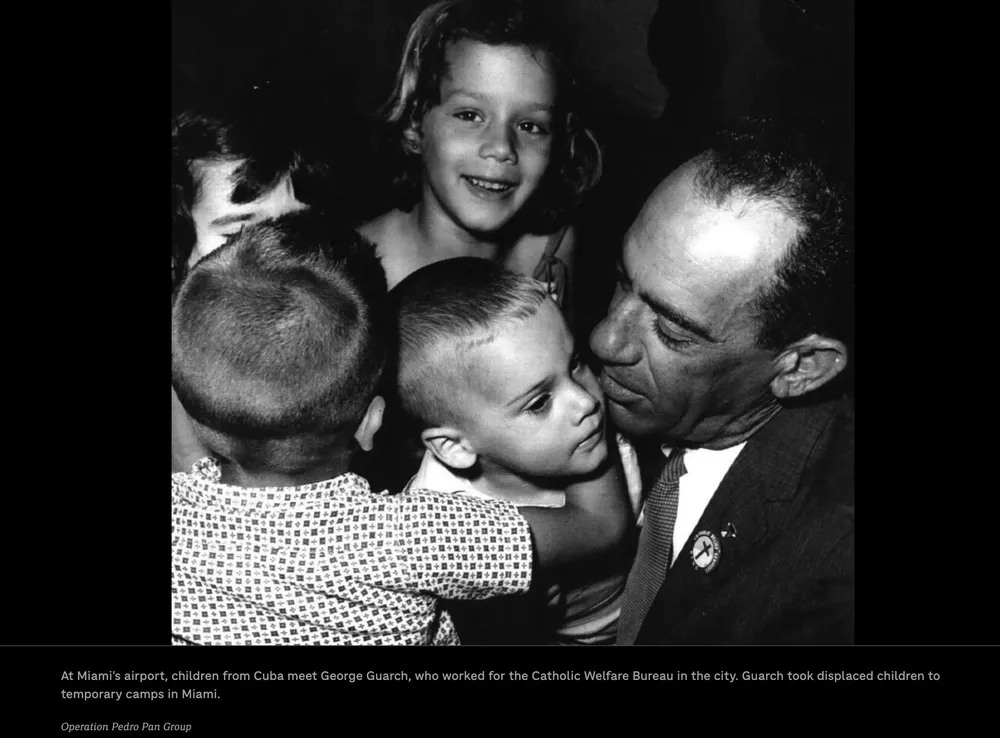
Personal Memories of a Historic Event “The Peter Pan Program” (Excerpt)*